Pascal Siakam was supposed to be a priest.
Enrolled in a seminary in Cameroon until age 15, basketball wasn't even on his radar. Now he's an NBA starter and the founder of PS43 Productions -- a creative studio building content campaigns and music videos with cultural edge and purpose. Watching him during the 2025 playoffs, there was something about his story that wouldn't let me go. The unexpected path. The pivot nobody saw coming. Building something meaningful out of something unlikely.
It took me straight back to Oklahoma.
I never thought I'd go to Oklahoma. Working in the music industry took me there -- specifically to Stillwater, for a festival sponsorship pitch with a company called KICKER. I still have my construction-worker orange Eskimo Joe's (IYKYK) sweatshirt from that trip. That's how good it was.
Two brand loyalty examples from that world have stayed with me longer than almost anything else in my career. Both involve KICKER. Both happened over a decade ago. Both still shape how I think about what brand loyalty actually looks like.
In 2010, Alternative Press Magazine was celebrating its 25th anniversary. I was working inside the music industry at the time -- deep in the world of counterculture, community and creative brands that actually gave a damn.
KICKER ran a full-page ad in that issue.
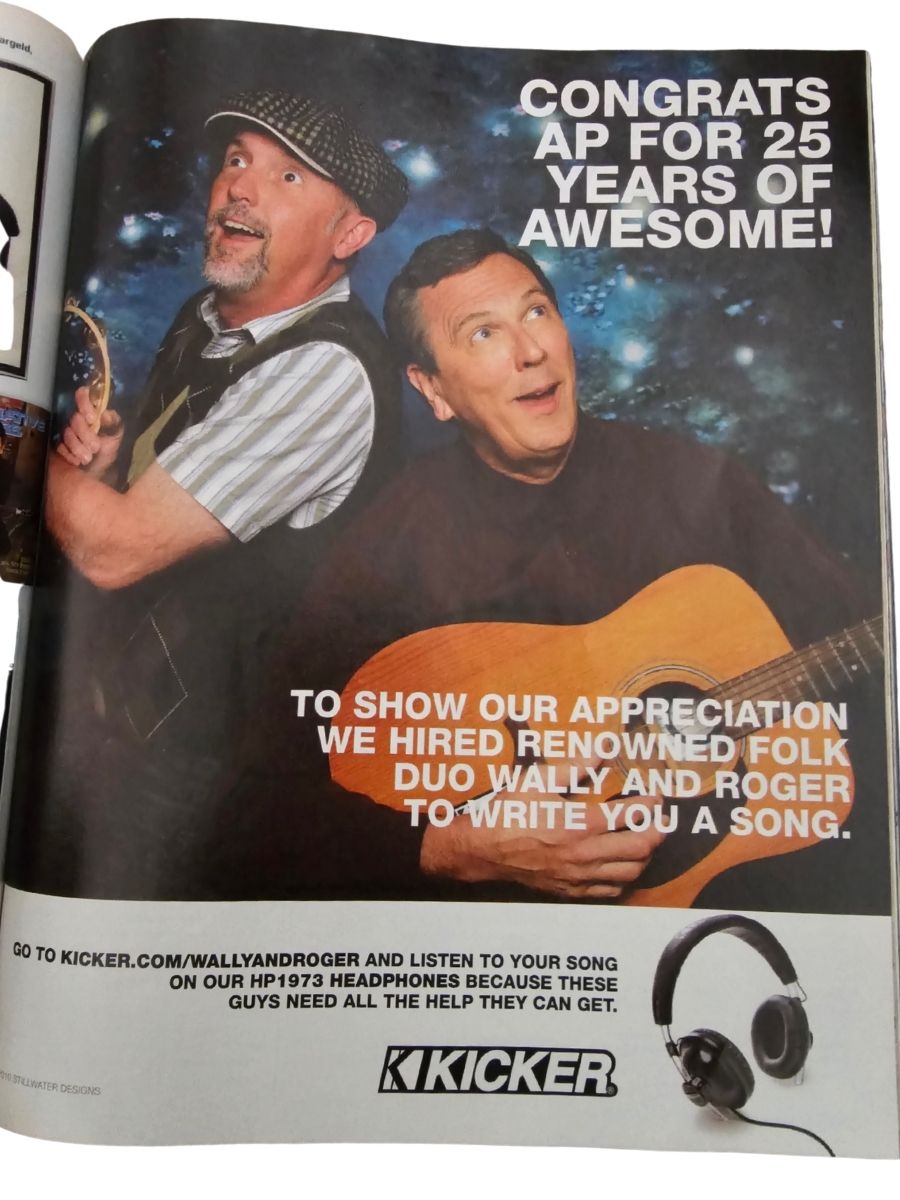
They could have pushed product. Instead, they hired a folk duo named Wally and Roger Demaree, KICKER's own creative force, to write AP a custom birthday song. The ad directed readers to kicker.com/wallyandroger to hear it -- with a cheeky line at the bottom about their HP1973 headphones because, as the ad put it, "these guys need all the help they can get."
They put the celebration first and the brand second. That's the move most companies can't make, and exactly why it's still worth talking about 15 years later.
That's the thing about genuine brand loyalty. It gets built in the margins. In the moments where a brand chooses connection over conversion.
In 2014, I flew into Tulsa and drove to Stillwater, Oklahoma to pitch KICKER on a festival sponsorship. I had no idea what I was walking into.
The Wall of Boom -- a floor-to-ceiling display of KICKER subwoofers -- hit me before I got my bearings. Demo cars. Bass carts. Snow-tracked off-road rigs. Every inch of that facility vibrated.
My body's response was immediate and completely involuntary. Some might call it dancing. Others might call it mild convulsions set to music. There is video evidence. I've included it below because I believe in full transparency and also because it's genuinely funny.
This wasn't a showroom. It was a brand experience built for people who actually love what the brand stands for.
And then there were Ron and Roger -- two of the best collaborators I worked with during my time in sponsorship sales. They showed up fully, whether we were talking ads, ideas or subwoofers. Curious, creative, committed. That trip became its own brand loyalty example. The kind where you leave a meeting knowing you'd go to bat for those people long after any deal closed.
KICKER has been Livin' Loud since 1973. That trip showed me exactly why.
Both moments share the same DNA. Neither was flashy. Neither followed a formula. Both were rooted in genuine human connection, the kind that outlasts any campaign, any season, any budget cycle.
Brand loyalty is a memory. The question worth sitting with is: what kind of memories is your brand making?
The brands that earn lasting loyalty aren't the ones with the biggest budgets. They're the ones that show up like humans -- in magazine pages, at trade shows, in stories told over and over again to anyone who will listen.
If you're building a brand that people actually remember, that's the work we do at Great Life's Work. And it's worth doing right.
What is a brand loyalty example? A brand loyalty example is a specific moment or experience where a brand earns long-term trust through genuine connection rather than transactional exchange. The best examples are memorable, human and built around the customer's world, not the brand's agenda.
What builds brand loyalty for small businesses? Brand loyalty for small businesses gets built through consistency, authentic voice and moments that make people feel seen. You don't need a massive budget. You need to show up with intention and treat your audience like the humans they are. Here's how we help with that.
What's the difference between brand loyalty and customer retention? Customer retention is a metric. Brand loyalty is a relationship. Retention measures whether someone comes back. Loyalty measures whether they bring others with them, and whether they'd defend you in a room where you're not present.
Can one brand experience create lasting loyalty? Yes. One well-executed, genuinely human brand moment can create loyalty that lasts decades. Both KICKER examples above happened once. I'm still talking about them.
How does experiential marketing build brand loyalty? Experiential marketing builds brand loyalty by creating shared memories between a brand and its audience. When someone physically experiences what a brand stands for -- through an event, a space, a moment -- the emotional connection goes deeper than any ad could reach. The Wall of Boom wasn't a pitch. It was proof.
Image credits: Pascal Siakam image by Chensiyuan, licensed under CC BY-SA 4.0. KICKER ad originally published in Alternative Press Magazine, 2010. Used for editorial and commentary purposes.